A dialectal map of the Galician language
When the Real Academia Galega attempted to create a standard variety of Galician, the difficult question arose as to which variety or varieties it should base its work on. Since the failed attempt to catalogue linguistic information on all the languages spoken on the Iberian Peninsula in the Atlas Lingüístico de la Península Ibérica, several attempts have been made to map the Galician dialects. As part of his field research carried out between 1951 and 1963, Alonso Zamora Vicente identified two sub-dialects of Galician, which he described as continental (charactarised by the absence of gheada, the use of ceceo and the ending -ao in words derived from the Latin ending -anus) and atlantic (with gheada, seseo and the ending -an) (cf. Sousa 2023, p. 120).
Ricardo Carballo Calero built on this work and identified a third isogloss in his research between 1966 and 1979, which split the continental dialect group into two parts. This new Eastern dialect is characterised by verb forms with nasal endings (cantein as opposed to cantei, ‘I sang’), the solution -ut- for Latin -ukt- and -ult-, and the retention of the palatal lateral approximant [ʎ] (cf. Sousa 2023, p. 121).
However, the most detailed dialect map was undoubtedly the one created by Francisco Fernández Rei, who compiled the Atlas Lingüístico Galego. He criticised the use of the term dialecto, as he emphasised the inner unity of Galician, and coined the term blocs lingüísticos instead (cf. Monteagudo Romero and Bouzada Fernández 2003, p. 147). Based on Carballo’s division into western, central and eastern, Fernández divides these into áreas (areas), subáreas (sub-areas) and microsubáreas (micro-sub-areas), to each of which he assigns an alphanumeric code:
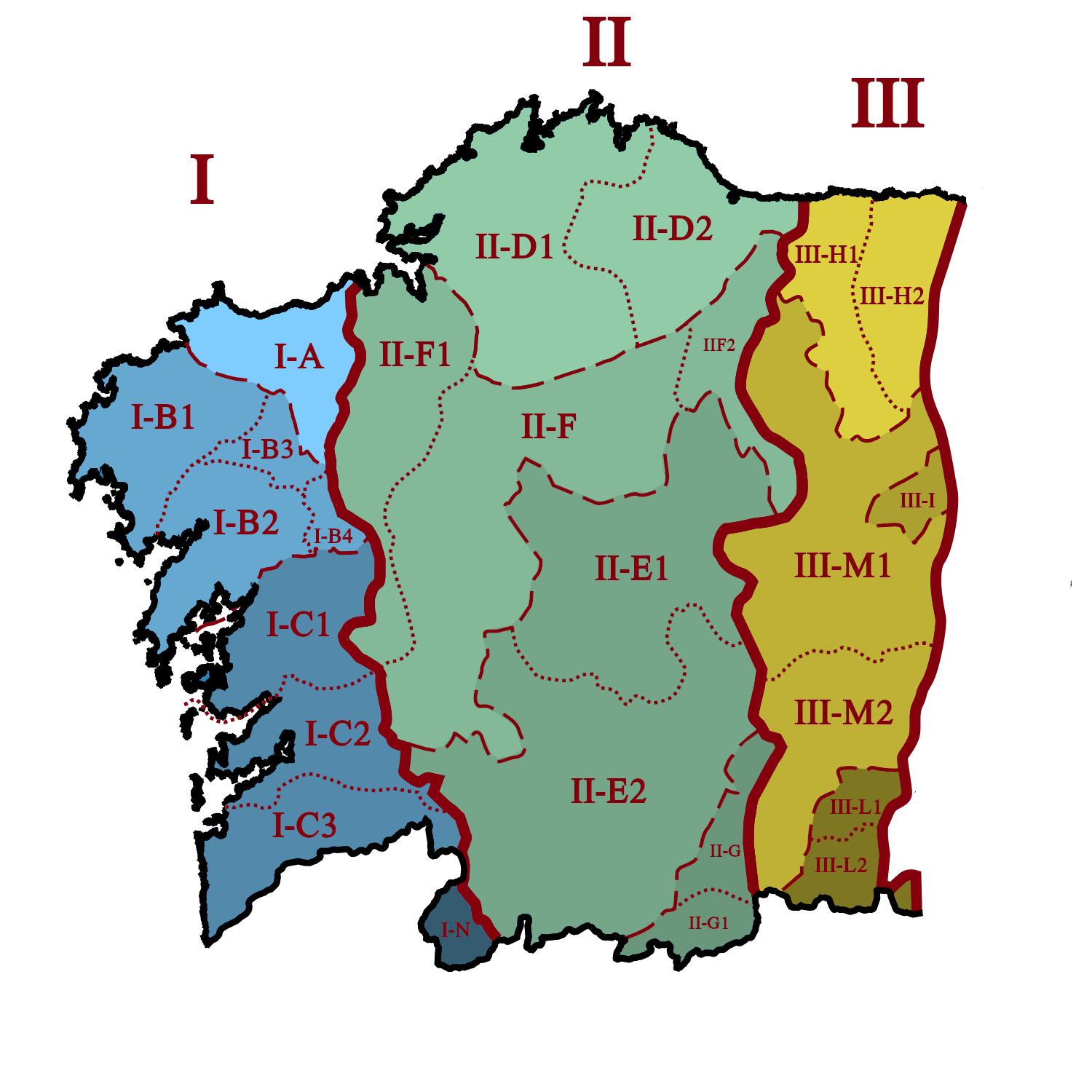
Fig. 1: Dialectal blocks of Galician, based on Sousa 2023:132.
I: Western
◼ I-A: Berganiñá
◼ I-B: Fisterrá
I-B1: Xallas
I-B2: Tambre
I-B3: Bembibre
I-B4: Compostelá
◼ I-C: Pontevedresa
I-C1: Ulla-Umia
I-C2: Verdugo & Minho
◼ IN: Limia
II: Central
◼ II-D: Mindoniense
II-D1: Mindoniense Occidental
II-D2: Mindoniense Oriental
◼ ID-E: Lucu-auriense
II-E1: Lucense
II-E2: Auriense
◼ II-F: Central de transición
II-F1: Occidental
II-F2: Meira
◼ II-G: Oriental de transición
II-G1: Oímbra & Vilardevós
III: Eastern:
◼ III-H Austuriana
III-H1 A Veiga-Os Oscos-Ibias
III-H2 Salave-Coaña-Boal
◼ III-I Ancaresa
◼ III-L Zamorana
III-L1 O Porto
III-L2 A Mezquita-Lubián
◼ III-M Oriental central
III-M1 A Fonsagrada-Courel-Bierzo
III-M2 Valdeorras-Viana
A dialectal map of the Catalan language
The primary isoglosses of Catalan extend from north to south, dividing the dialects into two main groups. This dialectal division was first systematically described in the mid-19th century by the historian Manuel Milà i Fontanals, who noted a pronounced phonological variation between the two groups, emphasising in particular the pronunciation of the atonic vowels /e/ and /o/. In the western dialects, these vowels are articulated more clearly, while in the eastern dialects they undergo a process of vowel reduction that leads to a pronunciation of [ə] or [u] (cf. Walsh 1986, p. 406).
These two dialect regions can be further divided into Nord-Occidental (north-western) and Valencià (Valencian) in the west, and Septentrional (northern), Central (central) and Balear (Balearic) in the east. There is also a small group of speakers on the Italian island of Sardinia, located in the town of Alghero, which belongs to this group.
The following map gives an impression of the geographical distribution of the Catalan dialects as shown in the language atlas of the Catalan language area:
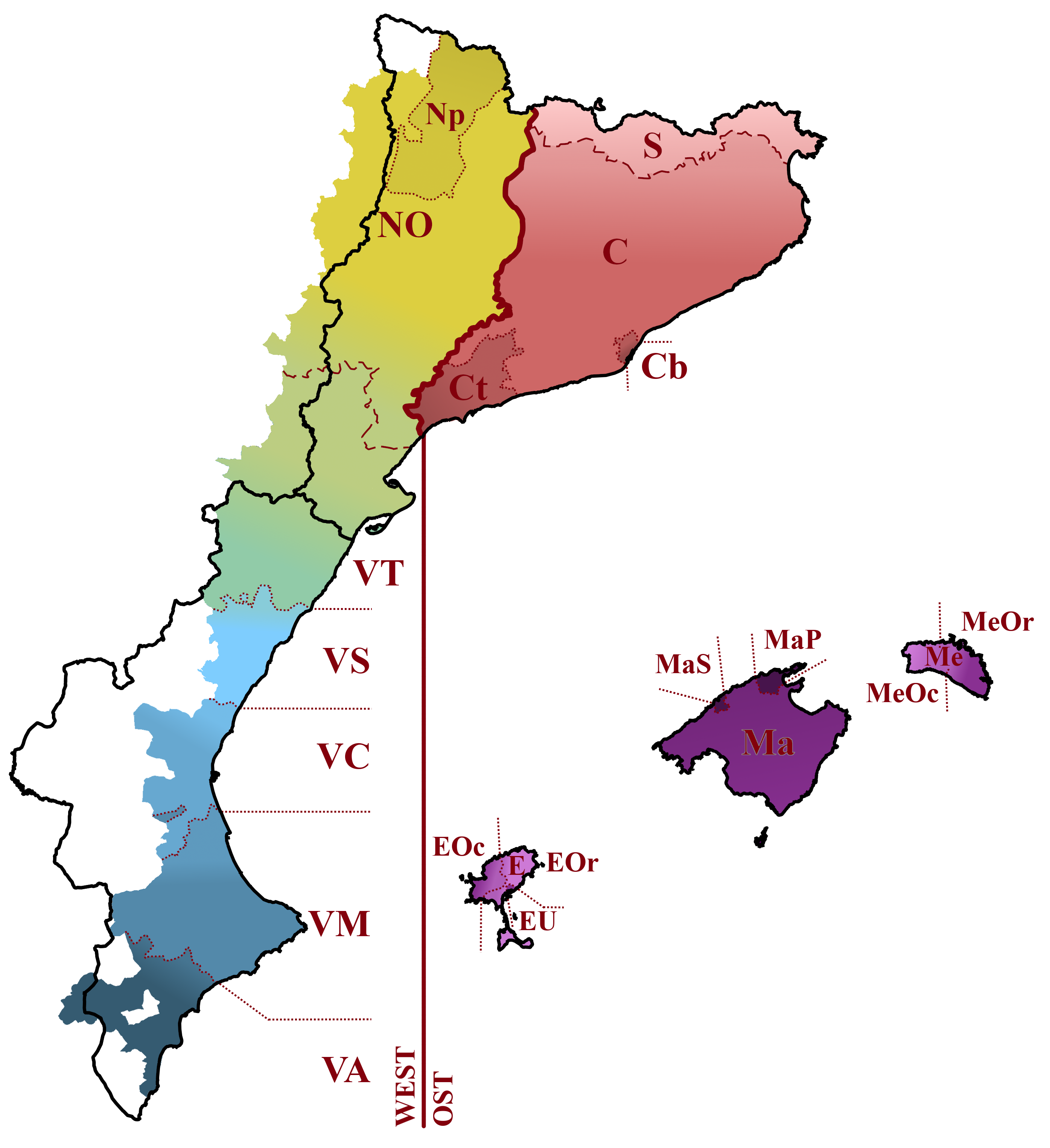
Fig. 2: Dialectal map of Catalan, based on Veny und Pons i Griera 2007, Mapa III.
Western
North-Western:
▮ NO: Nordoccidental
▮ Np: Pallarés
▮ Nr: Ribagorça
Valencian:
▮ VT: Valencià de transició
▮ VS: Valencià septentrional
▮ VC: Valencià apitxat
▮ VM: Valencià meridional
▮ VA: Valencià alacantí
Eastern
Central:
▮ C: Català (oriental) Central
▮ Cb: Barceloní
▮ Ct: Tarragoní
Northern:
▮ S: Septentrional de transició
Balearic:
▮ E: Eivissenc
▮ EOc: Eivissenc occidental
▮ EOr: Eivissenc oriental
▮ EU: Eivissenc urbano
▮ Ma: Mallorquí (var. majoritari)
▮ MaS: Mallorquí sollerico
▮ MaP: Mallorquí pollencino
▮ Me: Menorquí
▮ MOc: Menorquí occidental
▮ MOr: Menorquí oriental